

Getting someone to register for your race the first time is hard. Getting them to come back next year is harder — and more valuable.
Repeat registrants don’t need to be convinced your race is worth doing. They already know. They register earlier, spend more on add-ons, and bring friends. They’re also significantly cheaper to acquire than new participants, because you don’t have to spend a dollar on advertising to reach them — you just have to stay in front of them and give them a reason to return.
Most race directors understand this intuitively. What’s missing is a playbook. Here’s how to build one using the tools already available to you on RunSignup.
Start Before the Finish Line
The window between race day and the end of race week is the single most important retention moment you have — and most race directors let it slip by.
Your participants just finished your race. Their legs hurt, their medal is around their neck, and they feel great. That emotional high is the best possible context for a “see you next year” message. If you wait a week or two, the moment is gone.
Send a post-race email within 48 hours. This doesn’t have to be long. It just has to be timely and personal. Cover three things:
- Congratulations — acknowledge what they just did.
- Where to find results and photos.
- A soft prompt to come back — “Save the date for 2027” or an early bird teaser.
RunSignup’s free email tools make it easy to segment and send this quickly. Filter by race, pull your participant list, and send within hours of the finish line closing.

Build an Email Sequence, Not Just One Email
A single post-race email is better than nothing. But the race directors who consistently grow registration year over year tend to treat retention as a sequence, not a moment.
Here’s a simple four-email structure that works for most races:
Email 1 — Race week (within 48 hours): Results and photos. Keep it short and warm. This is acknowledgment, not a sales pitch.
Email 2 — Two to three weeks out: A deeper look back. Survey results, thank-you to sponsors, highlights from the day. This email builds community and keeps your race in their inbox without asking for anything.
Email 3 — Early bird announcement (four to six weeks out): Here’s where you ask. Open registration for next year — at your lowest price of the cycle — and let last year’s finishers be the first to know. Frame it as an insider benefit.
Email 4 — Early bird closing (one to two weeks before price increase): A simple reminder that the early bird price is going away. Urgency, no fluff.

RunSignup’s email automation tools let you schedule these in advance so they go out on time without manual effort every year. You build the sequence once; it runs for you each cycle.
Use Pricing Strategy as a Retention Tool
Early bird pricing isn’t just a cash flow tool — it’s a retention signal.
When your early bird price is meaningfully lower than general registration (not just $5 off), it creates a real incentive for returning participants to act fast. They know your race. They know they want to run it. The only question is whether now is the right time to commit.
Make it easy to say yes by giving them a concrete deadline and a clear savings number. “Register before October 1 and save $20” works better than “prices increase soon.”
A few things to do alongside early bird pricing:
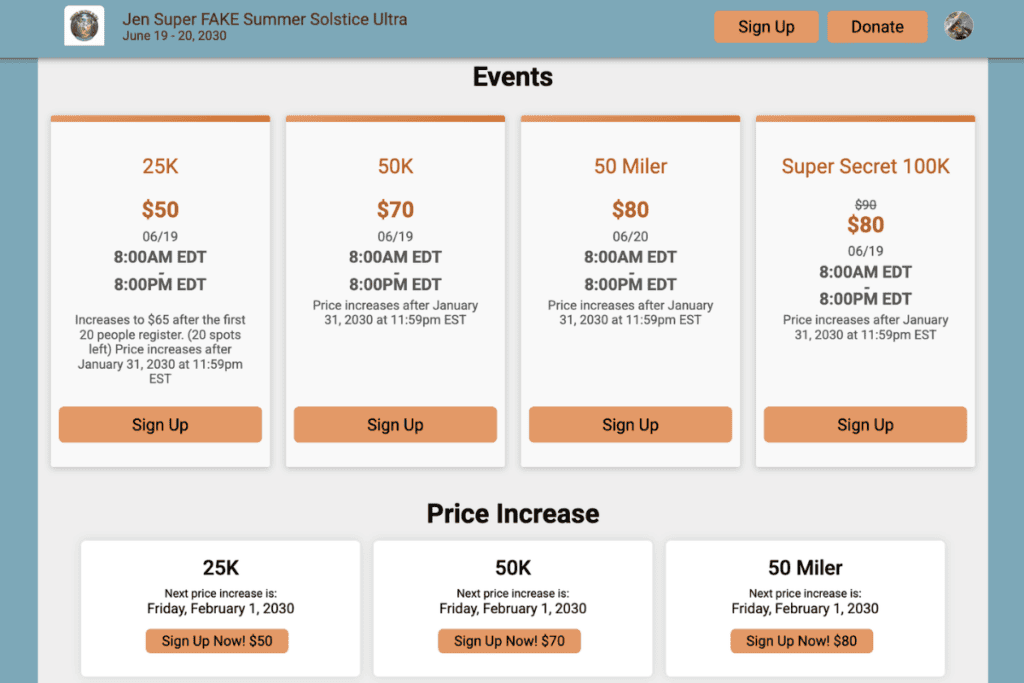
- Use the Price Increase Component on your Website V2 to show real-time pricing. Seeing the current price and the next tier date on your race website creates urgency without any extra copy.
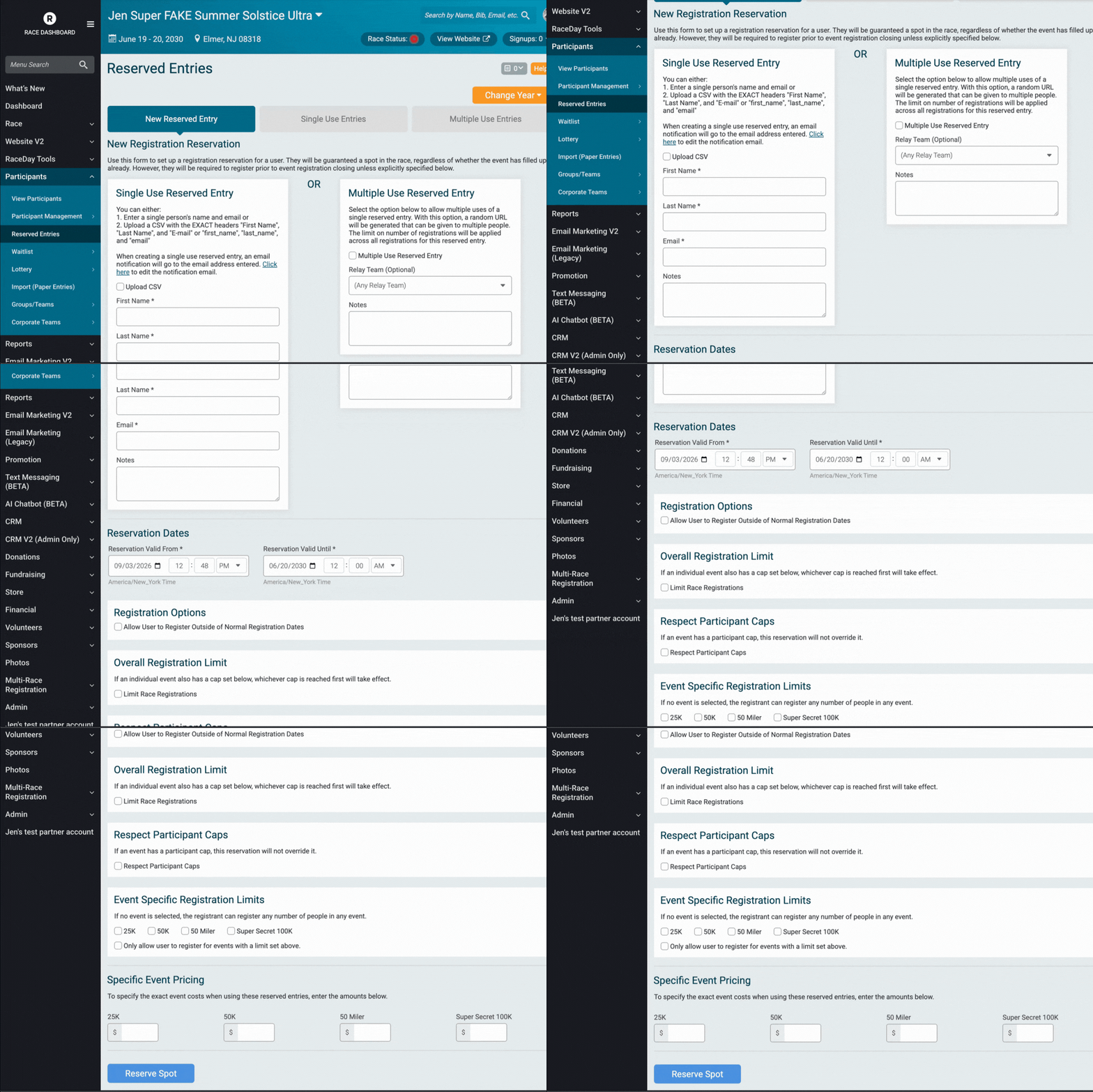
- Reserve your early bird price for last year’s finishers for the first 48–72 hours before opening it to the general public. This makes returning participants feel like insiders, not just subscribers on a list.
- Communicate price increases in advance — once in your email sequence, once via social. Runners who know a deadline is coming plan around it; the ones who miss it and register at full price feel less satisfied.
Let Your Loyalty Check-In Data Work for You
RunSignup’s Loyalty Check-In feature tracks how many times a participant has checked into your event over the years. This loyalty data is also available in your race dashboard — and it changes how you can talk to your participants.
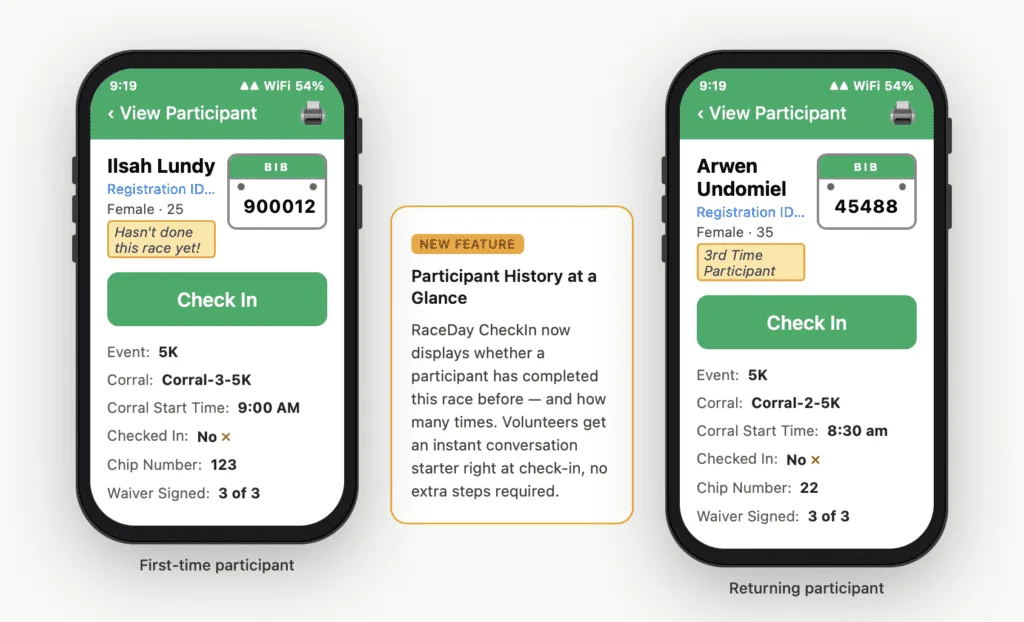
Instead of treating everyone on your list the same, you can recognize the difference between a first-timer and someone who has shown up five years in a row.
A few ways to use loyalty data in your retention strategy:
- Recognize multi-year participants publicly. A callout in your post-race email (“If this was your 3rd, 5th, or 10th year running with us — thank you”) costs nothing and builds the kind of attachment that makes people feel ownership over your race.
- Create a loyalty milestone moment on race day. A special bib color, a different corral, a call-out at the start line — small gestures that acknowledge tenure go a long way.
- Segment your email list by loyalty tier. Your 5-year returnees deserve a different message than first-timers. The former get recognition and an exclusive early window; the latter get encouragement and a “we hope to see you back” prompt. RunSignup’s participant reporting let you filter and export by however many years they’ve checked-in.
Don’t Forget the People Who Registered but Didn’t Run
Deferrals, DNS (did not start), and mid-race withdrawals are a separate retention category that often gets overlooked.
These participants paid to be part of your race and didn’t get the experience they signed up for. If you don’t follow up with them specifically, you’re leaving a re-registration on the table.
Send a separate post-race email to this segment — acknowledging that they weren’t able to make it, reminding them that you’d love to see them next year, and giving them the earliest possible access to registration. A personal tone matters here. “We missed you” lands differently than a generic results email.
If you offer deferrals, make the process frictionless. RunSignup supports deferral management so participants can transfer their registration to next year without having to contact you directly — which means less inbox work for you and a smoother experience for them.


Make It Easy to Bring a Friend
Word of mouth is still the most powerful registration driver for local and regional races. Your returning participants are your best salespeople — if you give them the tools to recruit.
Turn on referral links before or at registration opening. RunSignup’s referral link feature lets participants share a personalized link and track how many people they’ve recruited. Some race directors offer a small incentive (store credit, a future discount) for bringing in a new registrant.
8.1% Registrations from referrals
4.5% Of registrants make a referral
$1.38 Cost if acquisition (referral)
Build a team registration option if your race format supports it. Teams create social commitment — when three friends are all registered, the likelihood of any one of them dropping out goes down significantly.
Mention referrals in your post-race email sequence. “Know someone who should run this with you next year?” with a referral link included takes five seconds to write and can bring in registrations you’d never have gotten otherwise.
Build a Race That Creates Repeat Registrants
Most race marketing energy goes into acquisition — finding new people, running ads, getting in front of new audiences. That work matters. But the highest-ROI thing a race director can do is get last year’s participants to come back.
The tools exist: post-race emails, early bird pricing, loyalty recognition, referral programs. What’s usually missing is the habit of using them systematically, before the off-season sets in and momentum is lost.
Build the sequence, schedule the emails, and open registration while the experience is still fresh. The race directors who grow year over year aren’t necessarily marketing harder — they’re retaining better.
RunSignup’s email tools, loyalty check-in tracking, referral programs, and participant management are all free with your race registration. Create your race or log into your dashboard to get started.